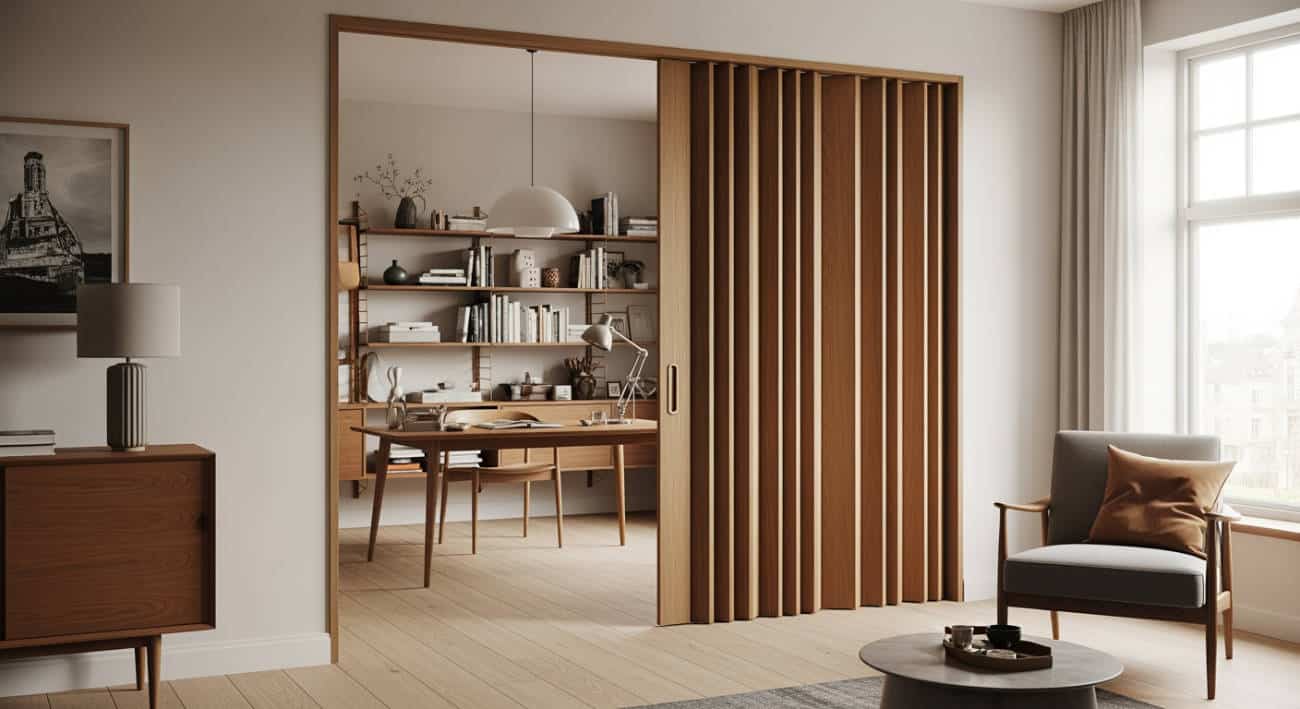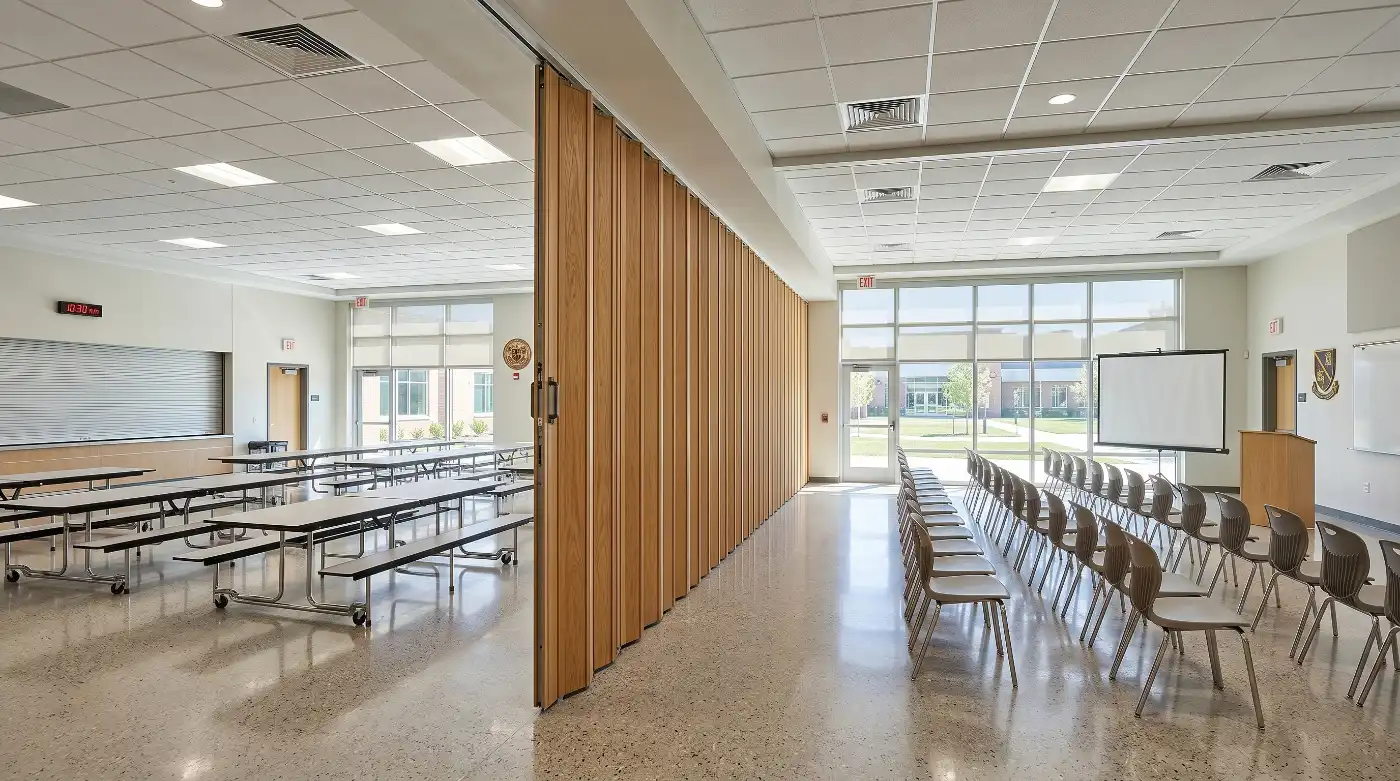

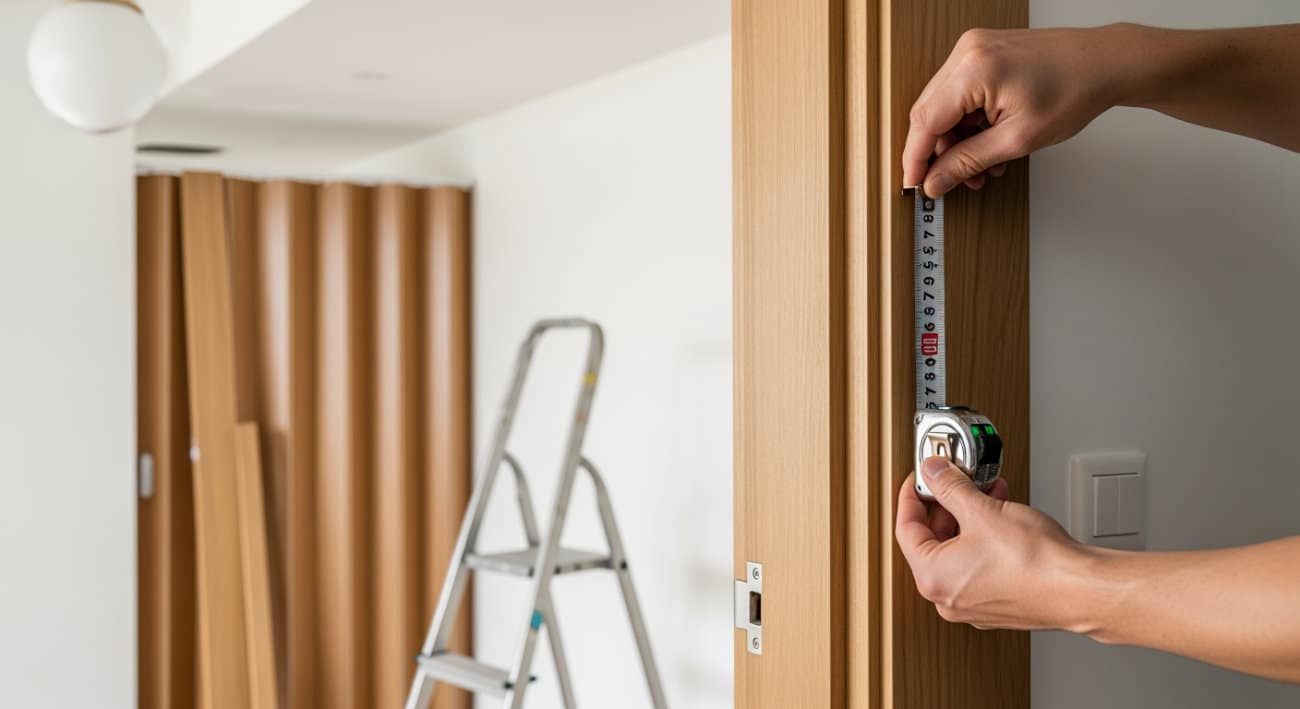
A custom accordion door can transform a room. It adds privacy, manages sound, and saves space. However, the success of your installation depends entirely on the accuracy of your measurements. Unlike standard swing doors, accordion doors are precision-engineered to fit your specific opening. Even a small error can lead to gaps or a door that drags on the floor.
At Specialty Doors & Hardware, we provide high-quality accordion doors for homes and businesses nationwide. We want your project to be a success from day one. Measuring is not difficult, but it does require a specific approach. Following these steps ensures your new door looks professional and operates smoothly.
Why Precision Matters for Custom Doors
Custom doors are built to the exact specifications you provide. Most manufacturers do not allow for returns on custom-sized products. This makes the measuring phase the most critical part of your purchase.
Accordion doors hang from a top track. They do not have a bottom track in most residential applications. This means the height must be exact to allow for smooth movement without letting in too much light or noise at the bottom. The width must be sufficient to cover the opening completely when the door is latched.
Gather Your Tools
Before you start, make sure you have the right equipment. You want to avoid “eyeballing” any distance.
-
A Steel Tape Measure: Do not use a cloth tape or a folding ruler. Steel tapes are more accurate over long distances.
-
A Sturdy Step Ladder: You will need to measure the very top of the opening.
-
A Level: This helps you check if your doorway is “plumb” (perfectly vertical) and “level” (perfectly horizontal).
-
Pen and Paper: Write every number down immediately. Do not try to remember them.
-
A Helper: For wide room dividers, having someone hold the other end of the tape is vital for accuracy.
Preparing the Opening
The “opening” is the space where the door will live. If you are installing the door in an existing finished doorway, you measure the inside of the frame. If you are building a new wall, ensure the drywall and trim are finished before you take your final measurements.
According to the American National Standards Institute (ANSI), structural openings can shift over time. This is why we never assume a doorway is perfectly square. Even in new construction, floors can slope and walls can lean.
Step 1: Measuring the Width
Accordion doors are flexible, but the track they sit in is rigid. You need to measure the width of the opening at three different points:
-
The Top: Measure inside the jamb from left to right at the very top.
-
The Middle: Measure halfway down the door.
-
The Bottom: Measure at the floor level.
Which number do you use? For the width, you generally use the largest of the three measurements. You want to ensure the door can fully reach the strike side without being stretched too thin. If there is a significant difference (more than half an inch), your doorway is out of square. You may need to adjust your trim before ordering.
Step 2: Measuring the Height
The height is the most important measurement for an accordion door. If the door is too long, it will bunch up and ruin the bottom sweep. If it is too short, the gap will be unsightly. Measure the height at three points:
-
The Left Side: From the top underside of the header to the floor.
-
The Center: From the top header to the floor.
-
The Right Side: From the top header to the floor.
Which number do you use? For the height, you must use the smallest of the three measurements. This ensures the door will clear the floor at its highest point. Most manufacturers will take your “finished opening” height and make a small deduction (usually 1/4 to 1/2 inch) to allow for the track and floor clearance.
Considering the Floor Surface
What kind of floor do you have? This changes how the door behaves.
-
Hardwood or Tile: These are usually level, making measurements straightforward.
-
Carpet: If you have thick shag carpet, the door might drag. You should measure to the top of the carpet fibers, not the floor beneath.
-
Uneven Floors: If your floor slopes significantly, you may need a “sweep” or a “valance” to hide the gap. Specialty Doors offers solutions like Mobilflex for complex commercial spaces that face these issues.
Identifying the Mounting Surface
Where will the track be attached? Accordion doors can be mounted in two ways:
1. Inside Mount
The track is attached to the underside of the door header. This is the most common for standard doorways. Your measurements should reflect the exact inside dimensions of the frame.
2. Surface Mount
The track is attached to the wall above the opening. This is often used for large roll-up doors or when there is no header. If you are surface mounting, you need to decide how much “overlap” you want on the sides and top.
Account for the Stack Space
Accordion doors do not disappear. When they are pushed open, the folds of the fabric or wood bunch together. This is called “stack space.”
If you have a narrow 30-inch doorway, a 6-inch stack will leave you with only 24 inches of walkable space. You must ensure that the remaining clear opening is wide enough for your needs. If space is tight, we can help you calculate the exact stack depth for different models, including heavy-duty elephant doors used in industrial settings.
Checking for Obstructions
Before you finalize your order, look around the doorway.
-
Light Switches: Will the door stack cover the light switch when open?
-
Baseboards: Does your baseboard trim stick out? If so, the door may hit it when closing. You might need to add a “strike” strip to the wall so the door latches flush.
-
Crown Molding: Ensure the top track has a flat surface to sit against.
How to Handle Out-of-Square Openings
If your level shows that the header is sloped or the walls are leaning, don’t panic. Small discrepancies are normal. However, if the opening is off by an inch or more, you have two choices:
-
Fix the Opening: A carpenter can shim the jambs to make them plumb and level.
-
Custom Manufacturing: Talk to us about the specific variance. Some doors can be modified with longer sweeps to accommodate slightly uneven floors.
Commercial vs. Residential Measuring
If you are measuring for a large office or a warehouse, the stakes are higher. Commercial openings often use steel channels. The Steel Door Institute provides guidelines for commercial frames that can be helpful for contractors.
For large-scale projects, we often recommend measuring twice on two different days. Temperature changes can actually cause large metal buildings to expand and contract, which might affect your roll-up door measurements.
Double-Check Your Numbers
The most common mistake is transposing numbers—writing 36 instead of 63.
-
Re-measure every point.
-
Have your helper read the numbers back to you.
-
Check if you are using inches or centimeters (Specialty Doors uses inches).
-
Use a “Measurement Worksheet” if possible.
Ordering Your Custom Door
Once you have your three width measurements and three height measurements, you are ready to order. On our accordion doors page, you will find options for various materials, including wood, vinyl, and aluminum.
When you provide us with your numbers, clarify that these are “Finished Opening” dimensions. This tells us that we need to make the necessary deductions for hardware and clearances. If you give us “Net Door” dimensions, the door might arrive too large for the space.
The Specialty Doors Advantage
We have been in the door business since 1996. We have seen every possible measuring mistake and every type of “impossible” doorway. Our team is available to walk you through the process over the phone or via email.
We don’t just sell doors; we provide solutions. Whether you need a simple closet door or a massive elephant door for a sound stage, we bring the same level of precision to every order. Learn more about us and our commitment to quality hardware.
Final Tips for Successful Accordion Door Fit
-
Don’t Round Up: If the measurement is 35 and 5/8 inches, write that down. Don’t round to 36.
-
Watch the Tape: Ensure the tape measure is perfectly straight. If it sags or bends, the measurement will be inaccurate.
-
Think About Handling: Decide which way you want the door to pull. Do you want it to latch on the left, the right, or meet in the middle (biparting)? This doesn’t change the size, but it changes the installation.
Measurement Recap: For your New Accordion Door
-
Tools: Use a steel tape measure and a level for the best results.
-
Width: Measure the top, middle, and bottom. Use the largest width for your order.
-
Height: Measure the left, center, and right. Use the smallest height to ensure floor clearance.
-
Opening: Always measure the “finished opening” (after drywall and trim are done).
-
Stack Space: Account for the space the door takes up when folded open so it doesn’t block the walkway.
-
Obstructions: Check for light switches, baseboards, and molding that might interfere with the track or the door.
-
Clearance: Standard custom doors include a small deduction for the track; always confirm if you are providing “Opening Size” or “Door Size.”
Ready for Your Perfect Custom Door?
Now that you know how to measure like a pro, it’s time to choose your style. A perfectly fitted accordion door will improve the flow and function of your space for years to come. At Specialty Doors & Hardware, we offer the best selection of custom doors and high-end hardware in the industry.
Contact Specialty Doors & Hardware today to discuss your project or start your custom order online!