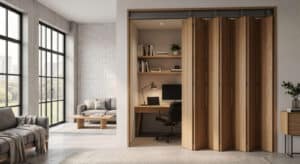

Accordion doors are more than just simple folding barriers. They are precision-engineered tools for space management. Whether you are looking to divide a large conference room or create a closet in a small studio apartment, understanding how these doors function is essential.
Most people see the surface—the beautiful wood finishes or the sleek vinyl. However, the real magic happens behind the scenes. The hardware determines how long the door lasts, how quiet it stays, and how easily it slides across a room.
At Specialty Doors & Hardware, we have spent decades perfecting the art of the opening. We provide high-quality accordion doors and room dividers that serve both residential and commercial needs. To choose the right door for your project, you need to understand the three main components: the tracks, the rollers, and the panels (sometimes referred to as bales).
The Track: The Foundation of Movement
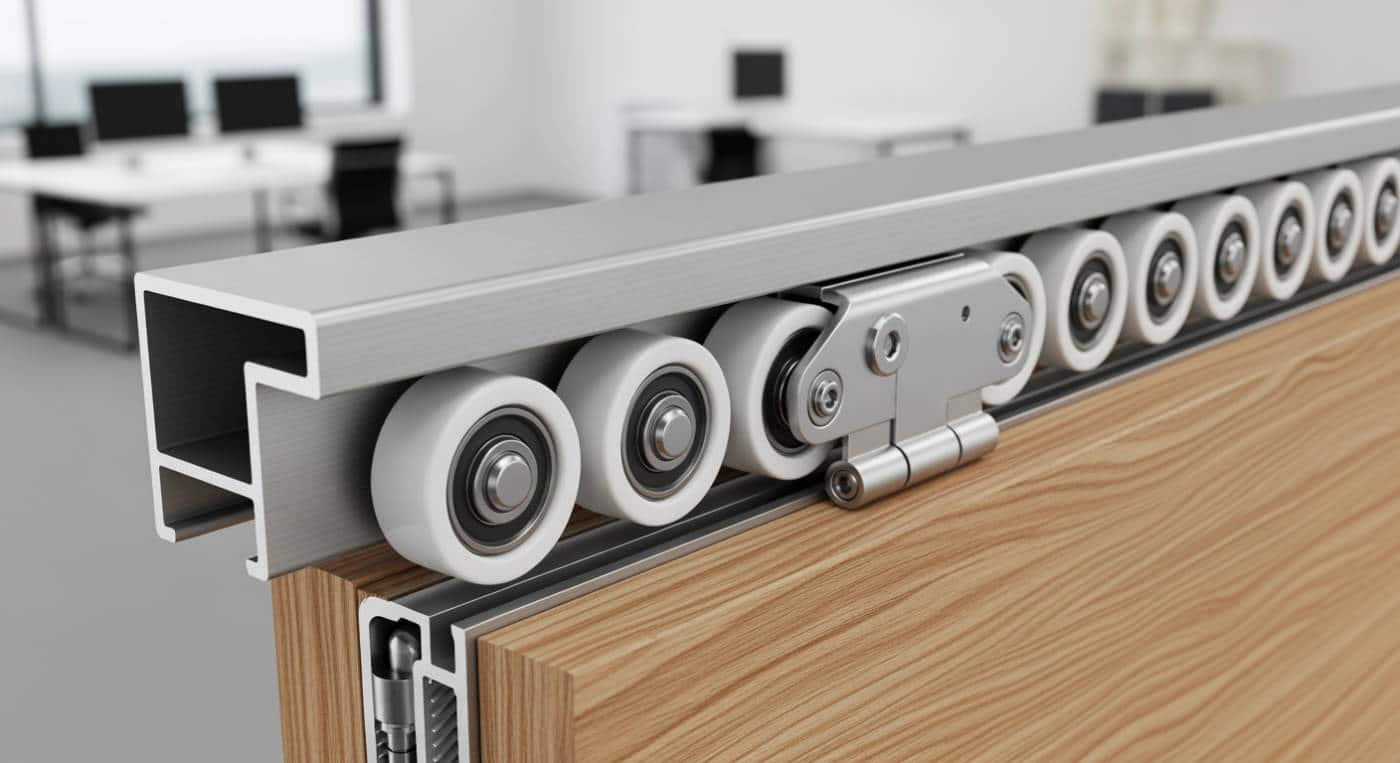
The track is the backbone of any accordion door system. It is usually mounted to the ceiling or a header within a door frame. The track’s job is to provide a smooth, unwavering path for the door to follow.
Material Matters
Most high-quality tracks are made from extruded aluminum. Aluminum is preferred because it is lightweight yet incredibly strong. It does not rust, which is vital for long-term durability. Some residential models may use PVC tracks, but for commercial applications or heavy-duty use, aluminum is the industry standard.
Heavy-Duty vs. Standard Tracks
The weight of the door dictates the type of track required. A solid wood accordion door is significantly heavier than a vinyl one. If the track is too thin, it will bow over time. This leads to sticking and mechanical failure.
Recessed vs. Surface Mounted
In new construction, tracks are often “recessed.” This means they are tucked up into the ceiling, creating a seamless look where the hardware is invisible. Surface mounting is more common in retrofitting projects. The track is screwed directly into the existing header. Both methods work perfectly as long as the support structure can handle the weight of the door.
The Rollers: The Engines of the System
If the track is the road, the rollers are the wheels of the car. The quality of the rollers determines the “hand-feel” of the door. A high-end door should feel almost weightless when you pull it across the room.
Ball Bearing Technology
Quality accordion doors use ball-bearing rollers. These consist of small steel balls inside the wheel housing that reduce friction. Without ball bearings, the door will “drag” and make a loud screeching sound.
Nylon vs. Steel Wheels
Steel wheels are durable but can be noisy. Nylon-coated wheels are the preferred choice for modern room dividers. The nylon provides a soft, quiet contact point with the metal track. This is especially important in environments like libraries, offices, or bedrooms where noise reduction is a priority.
Tandem Rollers
For very large or heavy doors, tandem rollers are used. These feature two wheels on a single bracket. This design distributes the weight more evenly, preventing the track from wearing down in specific spots.
The Panels and Bales: The Visible Structure
The body of the door consists of vertical panels. In the industry, the collection of these panels is sometimes referred to as the “bale.” These panels are connected by flexible hinges that allow them to fold in a compact stack.
Accordion Door Materials
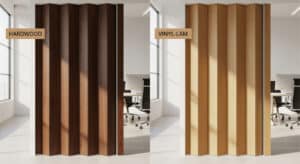
The material you choose affects both aesthetics and functionality.
-
Vinyl: Cost-effective, easy to clean, and available in many colors.
-
Wood Veneer: Provides a warm, high-end look for homes and boardrooms.
-
Acoustic Panels: Specialized panels designed to block sound transmission.
The Stacking Ratio
One of the biggest advantages of accordion doors is their “stacking ratio.” This is the amount of space the door takes up when it is fully pushed to the side. Most doors stack at a ratio of about 2 inches per lineal foot. This means a 10-foot door will only take up about 20 inches of space when opened.
The Hinge System: Keeping it Together
The panels are joined by hinges. In many accordion doors, these hinges are made of flexible vinyl or durable fabric. These hinges run the full height of the door.
Full-Height Hinges
Unlike a standard swinging door that has two or three small hinges, accordion hinges are continuous. This prevents “sagging” and ensures that the panels remain perfectly vertical. It also helps with light and sound control by eliminating gaps between the panels.
Security and Locks
Accordion doors can be fitted with various locking mechanisms. You can choose from simple thumb turns for privacy or key-locks for security. In commercial settings, these doors are often used to close off retail kiosks or sensitive office areas after hours.
Specialized Systems: Mobilflex and Beyond
Sometimes, a standard accordion door isn’t enough. For high-security retail environments, we often recommend Mobilflex systems. These are heavy-duty folding closures often seen in malls or airports.
Mobilflex doors use the same basic anatomy—tracks and rollers—but the panels are often made of open-style aluminum rods or perforated steel. This allows for security while maintaining airflow and visibility.
For even larger industrial needs, we offer Elephant Doors. These are massive, reinforced systems designed for airplane hangars or large acoustic venues. While the scale is much larger, the principle remains the same: a track-based system that allows for massive space flexibility.
Why Sound Control Matters
Many customers look at accordion doors for noise reduction. While a standard vinyl door provides some privacy, it won’t block a loud conversation. For that, you need an acoustic accordion door.
STC Ratings
Sound Transmission Class (STC) is the measurement used to rate how well a door blocks sound. To achieve a high STC rating, the door anatomy changes slightly:
-
Internal Liners: Lead or heavy vinyl layers are added inside the panels.
-
Sweep Seals: Rubber or felt seals are added to the top and bottom of the door to close the gaps between the door and the floor/ceiling.
-
Acoustic Insulation: The panels are filled with sound-dampening material.
By closing these “air gaps,” you can transform a noisy open office into a quiet, productive workspace.
Installation Basics: Getting the Alignment Right
Even the best roll-up doors or accordion dividers will fail if they aren’t installed correctly. The track must be perfectly level.
The Leveling Test
If the track is slightly slanted, the door will “drift.” It will either refuse to stay open or refuse to stay closed. Installers use high-precision laser levels to ensure the track is flat across the entire span.
Floor Clearances
Accordion doors are “top-hung.” This means the floor doesn’t carry any weight. However, you still need a slight gap at the bottom (usually 1/2 inch) to prevent the door from dragging on the carpet or tile.
Maintaining Your Accordion Door
One of the reasons Specialty Doors & Hardware has been around for so long is that we build things to last. But even the best hardware needs a little care.
-
Clean the Track: Dust and hair are the enemies of rollers. Use a vacuum with a brush attachment to clean the inside of the track every few months.
-
Lubrication: Avoid using heavy grease. A light spray of dry silicone lubricant on the rollers will keep them moving silently.
-
Wipe Down Panels: For vinyl or wood, a simple damp cloth is all you need. Avoid harsh chemicals that can degrade the flexible hinges.
Finding Technical Resources
If you are an architect or a contractor, you likely need more than just a general description. You need specifications. We offer detailed resources on our site to help you plan your project.
For industry standards on folding partitions, you can consult the Architectural Woodwork Institute (AWI) for finishing standards. Additionally, the Doors and Hardware Institute (DHI) provides excellent safety and installation guidelines for commercial openings.
Space Management in the Modern Era
As real estate costs rise, the ability to multi-purpose a room becomes a financial necessity. A home office that can double as a guest bedroom adds immediate value to a property. A restaurant that can create a private dining room for parties increases its revenue potential.
Our accordion doors provide that flexibility without the cost of a permanent wall. They are the ultimate tool for anyone who wants to take control of their environment.
Why Choose Specialty Doors & Hardware?
We are not just a warehouse. We are experts in door technology. We understand the nuances of Elephant Doors and the delicate aesthetics of high-end home dividers.
When you look at our about us section, you see a team dedicated to solving complex architectural problems. We work with you from the design phase through to the final installation to ensure your door performs exactly as expected.
Article Recap
-
Track: The aluminum or steel foundation that guides the door’s path.
-
Rollers: The ball-bearing wheels that allow for smooth, quiet operation.
-
Panels/Bales: The structural body of the door, available in wood, vinyl, or acoustic materials.
-
Hinges: Continuous flexible joints that prevent sagging and gaps.
-
Stacking: The efficient folding mechanism that saves space when the door is open.
-
Customization: Options for sound control (STC ratings), security, and specialized industrial sizes.
-
Maintenance: Simple track cleaning and lubrication ensure a lifetime of use.
Your space should work for you, not against you. Don’t settle for static walls when you can have a dynamic environment.
Ready to transform your room? Contact Specialty Doors & Hardware today to get a quote or speak with a specialist. Whether you need a simple closet door or a massive industrial divider, we have the hardware and the expertise to make it happen.