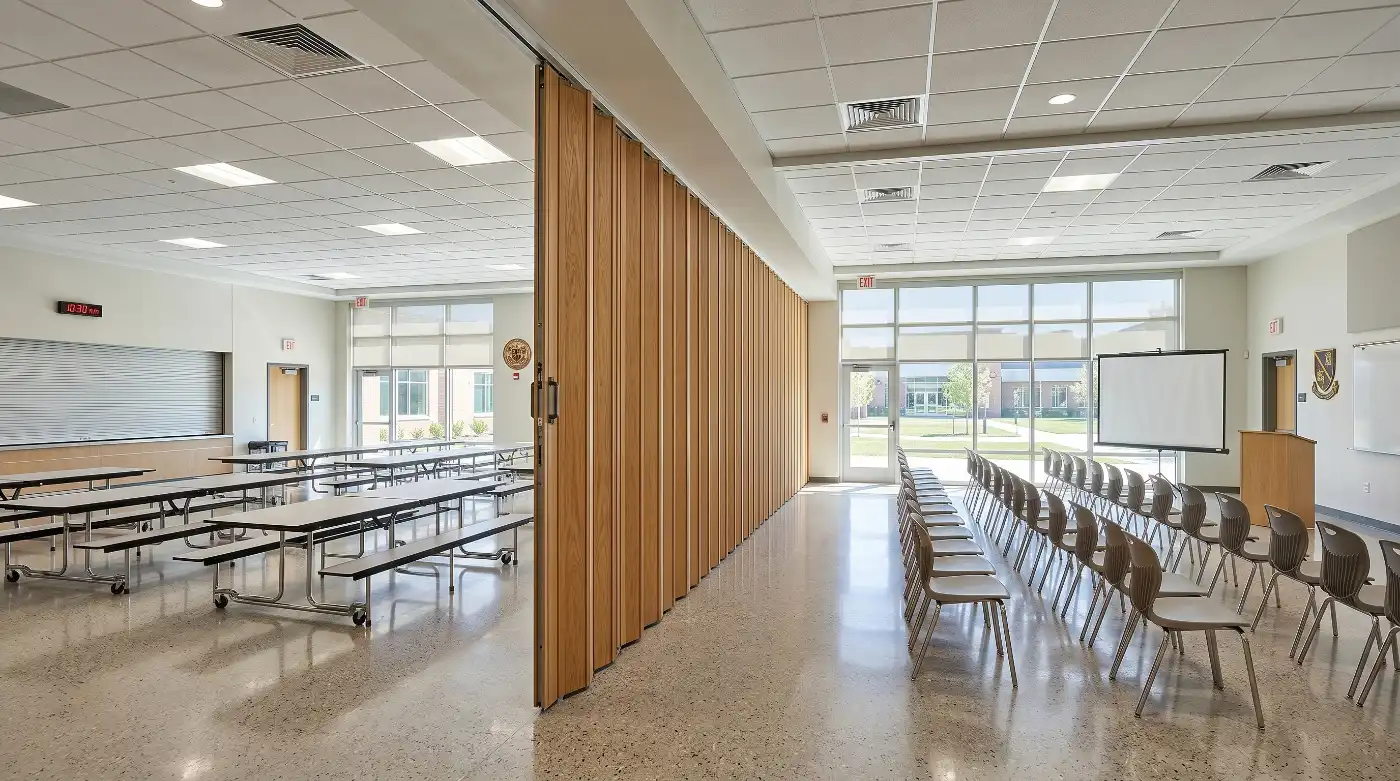

Typically, they don’t have any seal.
They just slide on the face.
If you want to make it air tight, you’ll have to add something to the door or to the wall so that when it’s shut, it seals.
Basically what we normally recommend is just a door sweep, something that goes along the bottom of a swing door and seals between the floor and the bottom of the door.
You either put those around, either the perimeter of the door, so they are attached to the door and they slide against the wall, or you can put them around the perimeter of the opening and they touch the door as the door slides across them.
Most people prefer to have them on the door because if you put them on the opening and you slide the door out of the opening, you’ll see that weather stripping around the opening, attached there.
For the most part, you’re pretty much limited to using brush weather stripping, because if you use a vinyl or a silicon weather stripping, the friction of it, sliding across your wall will wear it out prematurely.
Brush holds up a lot better against that type of use.
Since you’ll be using a brush strip, you won’t get a sound rating, and it’s not going to be a perfect seal, but it will help prevent most air infiltration and that kind of sliding door hardware.
The absolute best way to keep debris out, on an exterior door, is to build an overhang over the top of the overhang, like the roof of a porch or something.
Then put weather stripping around the door still, but that overhang is going to prevent most of the wind blown rain or snow or weeds or sliding door hardware, from getting in and around the top part of the door.
Frequently Asked Questions
How to seal between door frame and wall?
Use high-quality exterior caulk or expanding foam to seal gaps between the door frame and wall. For accordion doors and folding partitions, flexible caulk works best since these systems have slight movement during operation. Clean the gap thoroughly, apply caulk in a continuous bead, and smooth with a caulk tool for a professional finish that prevents air infiltration.
Should you put caulk on the edges of your sliding door?
Yes, caulk the perimeter where the sliding door frame meets the wall to prevent air leaks and moisture infiltration. For movable partition systems, use flexible acrylic caulk that can accommodate slight movement. Avoid caulking the bottom track unless specifically required, as most sliding systems need drainage capability to prevent water buildup and track damage.
What type of weatherstripping is used on sliding doors to prevent air leaks?
Sliding doors typically use brush seals, compression seals, or magnetic weatherstripping depending on the application. Commercial accordion doors often feature adjustable brush seals along the sides and magnetic seals at meeting points. Pile weatherstripping works well for lighter residential applications, while heavy-duty commercial installations require more robust compression or magnetic seal systems for effective air infiltration control.
How does the door sweep seal work on the bottom of a sliding door?
Door sweep seals create a barrier between the door bottom and floor, using flexible material like vinyl or brush bristles that compress when the door closes. For accordion doors and sliding partitions, adjustable sweeps accommodate slight floor variations. The sweep deflects as the door operates, then springs back to seal against air infiltration, sound transmission, and debris while allowing smooth door movement.
Does a sliding door need different seals for the top track versus the side jambs?
Yes, different sealing methods are used for various locations. Top tracks typically use weather seals or gaskets integrated into the track system to prevent air infiltration from above. Side jambs require compression seals or magnetic strips that engage when the door closes. Bottom seals use door sweeps or threshold gaskets. Each location has different movement patterns and sealing requirements for optimal performance.
Why do sliding door seals fail over time and need replacement?
Sliding door seals deteriorate from constant compression and release cycles, UV exposure, temperature fluctuations, and accumulated debris. Brush seals flatten and lose effectiveness, while rubber gaskets crack and shrink. Heavy commercial accordion doors experience more wear than residential applications. Regular cleaning and periodic replacement maintain air sealing performance, typically every 3-7 years depending on usage frequency and environmental conditions.