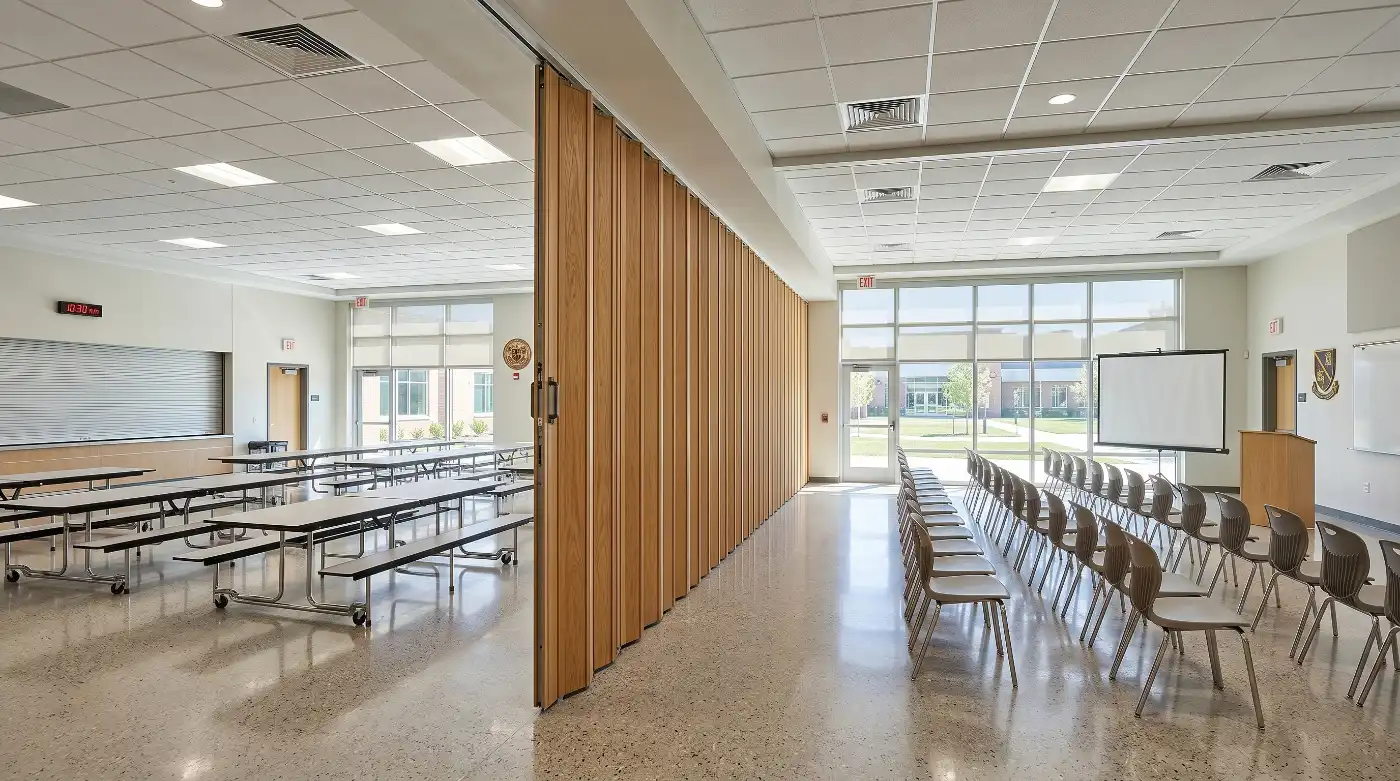

Modern interior design is moving away from static, permanent walls. Homeowners and business managers want spaces that adapt to their needs in real-time. This shift toward flexibility has placed a spotlight on innovative closure systems. At the heart of this movement are accordion doors and flexible room dividers.
Specialty Doors & Hardware provides high-end solutions for those looking to redefine their floor plans. Whether you are managing a busy office or a growing household, the ability to open or close a room instantly is a major advantage. We specialize in the “hard to find” hardware that makes these transitions seamless.
1. The Rise of the “Switchable” Home Office Trends
The work-from-home era has evolved. People no longer want a desk tucked into a bedroom corner. However, not everyone has a spare room to dedicate as a permanent office. The trend is now the “switchable” office.
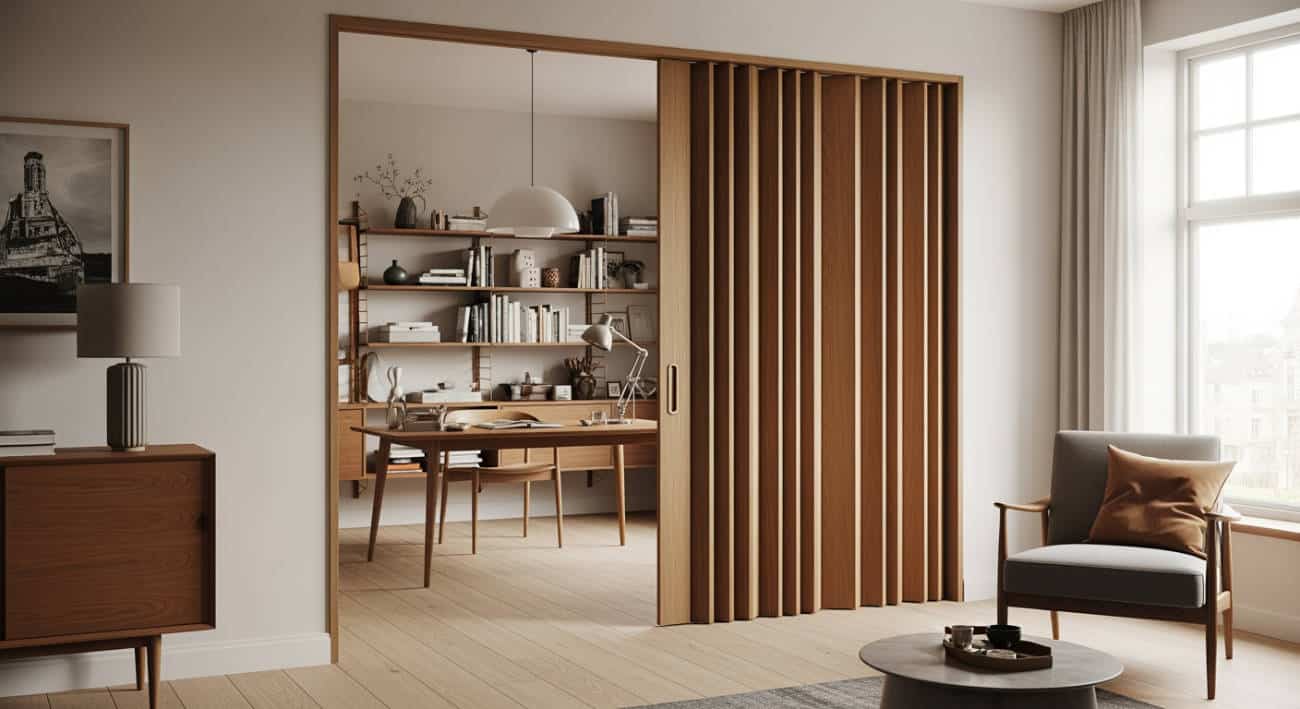
By using accordion room dividers, you can carve out a professional workspace in your living area during the morning. When the workday ends, the divider folds back completely. This restores the open-concept feel of your home. It helps maintain a healthy work-life balance by physically hiding the office when it is not in use.
2. Acoustic Privacy in Open Floor Plan Trends
Open floor plans are beautiful, but they are notoriously loud. Hard surfaces like wood floors and large windows cause sound to bounce. Modern design now incorporates “acoustic zoning.”
Accordion doors with sound-dampening properties allow you to “soften” a room. When closed, they provide a significant barrier against noise. This is ideal for a media room or a quiet study area. You can find more information on the technical standards for interior acoustics through resources like the Acoustical Society of America.
3. The Multi-Generational Living Split Trends
More families are sharing homes across multiple generations. This creates a need for privacy within a single dwelling. Permanent construction is expensive and often requires permits.
Flexible walls serve as an excellent alternative. They allow a large suite to be divided into a sleeping area and a sitting area. This gives elderly parents or adult children their own sense of “home” within the larger house. Because these doors fold into a small stack, the space remains accessible for mobility aids like walkers or wheelchairs when needed.
4. Hospitality and Event Space Flexibility Trends
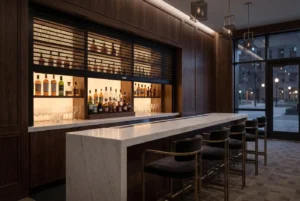
Restaurants and hotels are maximizing every square foot to increase revenue. A large banquet hall is difficult to book on a Tuesday night. However, three smaller private dining rooms are much easier to sell.
Commercial-grade Mobilflex systems are the gold standard for this application. They allow a manager to reconfigure a dining room in minutes. These systems are durable and provide a sleek, professional aesthetic. They ensure that a business can host an intimate 20-person lunch and a 100-person wedding on the same day.
5. Industrial Aesthetics with Roll-Up Door Trends
The “Industrial Chic” trend remains strong in 2026. Designers are increasingly using roll-up doors inside the home or office. These aren’t just for garages anymore.
A glass and aluminum roll-up door can separate a kitchen from a patio. It can also serve as a striking divider for a creative studio. These doors disappear into the ceiling, taking up zero floor space. This “invisible” footprint is a key driver for modern urban lofts where space is at a premium.
6. Massive Scale with Elephant Door Trends
Large-scale architecture requires large-scale solutions. In theaters, sound stages, and massive hangars, standard doors fail. This is where elephant doors come into play.
Even in residential design, we see a push for “over-sized” elements. Large sliding or folding walls can span 20 or 30 feet. This blurs the line between indoor and outdoor living. When the wall is open, the entire house becomes a pavilion. These systems require heavy-duty hardware that Specialty Doors & Hardware is uniquely positioned to provide.
7. The Kitchen “Scullery” Concealment Trend
Open kitchens are great for entertaining, but they can get messy. The trend of the “hidden scullery” or “dirty kitchen” is growing. This involves a small prep area tucked behind the main kitchen.
Accordion doors are the perfect way to hide the mess during a dinner party. You can keep the main island clean for guests while the dishes stay hidden behind a stylish folding wall. It offers the functionality of a professional kitchen with the clean look of a showroom.
8. Adaptive Retail Environment Trends
Retail stores are moving away from fixed aisles. They need to create pop-up sections or change their layout for seasonal inventory. Flexible dividers allow store managers to create “rooms” within a shop.
This helps guide the customer journey. A divider can create a temporary fitting room area or a VIP lounge for a special event. These systems are lightweight and easy for staff to operate without calling a maintenance crew. You can see how retail design impacts consumer behavior via Retail Design Institute research.
9. Sustainable Space Management Trends
Heating and cooling a large, open house is inefficient. If you are only using one section of a large home, why climate-control the whole building?
Using accordion doors to close off unused wings or rooms helps reduce energy consumption. It creates “thermal zones” that are easier for your HVAC system to manage. This sustainable approach to living is a major focus for environmentally conscious homeowners.
10. The Return of the Pocket Door Alternative Trends
Pocket doors are great, but they are difficult to install in existing homes because they require tearing out the drywall. Accordion doors offer a similar space-saving benefit without the construction headache.
Modern accordion doors come in high-end finishes like wood veneers, laminates, and even clear acrylic. They are no longer the “cheap” plastic doors of the past. They are now considered a sophisticated design element. They provide a high-quality look with a fraction of the installation time.
Choosing the Right Hardware
The beauty of a flexible wall is only as good as the hardware behind it. A door that sticks or jumps off the track is a liability. At Specialty Doors & Hardware, we focus on the mechanics.
We offer a variety of track systems, rollers, and handles that are built to last. Our team can help you navigate the differences between various folding systems. We ensure that the door you choose fits the specific weight and usage requirements of your project.
How to Get Started
Redesigning your space doesn’t require a sledgehammer. It starts with an assessment of how you actually use your rooms.
-
Identify the areas that feel “too big” or “too loud.”
-
Measure the opening where you want to add a flexible wall.
-
Determine if you need sound control or just a visual barrier.
-
Choose a finish that complements your existing interior design.
If you are a contractor or an architect working on a complex build, our contact page is the best place to start a consultation. We provide technical specs and guidance for even the most unusual door applications.
Key Takeaways for Flexible Wall Trends
-
Work-Life Balance: Use dividers to create temporary offices that vanish after 5:00 PM.
-
Sound Control: Accordion doors offer a physical barrier to manage noise in open-concept homes.
-
Cost Efficiency: Flexible walls are significantly cheaper than permanent framing and drywall.
-
Energy Savings: Zoning your home with folding doors helps reduce heating and cooling costs.
-
High-End Options: Modern materials like wood and aluminum make these doors a luxury design choice.
-
Zero Footprint: Folding and roll-up systems save floor space compared to swinging doors.
Redefine Your Space Today
Are you ready to stop being limited by your current floor plan? Whether you need to divide a bedroom, hide a kitchen, or create a private dining room, Specialty Doors & Hardware has the solution. We bring years of expertise to every project, ensuring your flexible walls operate smoothly and look stunning.
Explore our full selection of Accordion Doors and find your perfect fit today!
Frequently Asked Questions
How do flexible walls adapt to changing room layouts throughout the day?
Flexible walls feature track-mounted systems that slide, fold, or accordion open and closed on demand. Users can quickly reconfigure spaces from open layouts for large gatherings to divided rooms for privacy or focused work. Modern operable wall systems move smoothly along ceiling-mounted tracks, allowing instant transformation without tools or construction. This adaptability maximizes space utility throughout different daily activities.
What interior design trends are driving the popularity of movable partition systems in 2024?
Multi-functional living and hybrid work environments are driving demand for adaptable spaces. Homeowners want rooms that serve multiple purposes, while offices need flexibility between collaboration and focused work. Minimalist design trends favor clean, uncluttered spaces that can transform instantly. Rising real estate costs make maximizing existing square footage essential, making movable partitions a practical alternative to expensive renovations.
Can flexible wall systems support both acoustic privacy and open collaboration in modern offices?
Yes, acoustic-rated partition systems provide sound attenuation ratings up to STC 55 when closed, creating private meeting spaces or quiet work zones. When opened, the same systems allow full collaboration and visual connection across the workspace. Commercial-grade operable walls incorporate specialized sealing mechanisms and sound-dampening materials to ensure effective noise control while maintaining the flexibility to create open, collaborative environments.
Why are fold-away room dividers becoming essential for multi-functional living spaces?
Fold-away dividers allow single rooms to serve multiple purposes without permanent construction. Home offices can instantly become guest bedrooms, dining areas can separate from living spaces for entertaining, and open floor plans can gain privacy when needed. These systems maximize functionality in smaller homes and apartments where every square foot counts, providing flexibility that fixed walls cannot offer.
Does installing flexible walls increase property value compared to permanent room additions?
Flexible wall systems typically cost significantly less than permanent construction while adding versatility that appeals to buyers. They create functional room divisions without reducing natural light or making spaces feel cramped. The ability to quickly reconfigure layouts is increasingly valued in today’s market, especially for homes with open floor plans where buyers want both flexibility and privacy options.
When should homeowners choose operable walls over traditional fixed partitions for space division?
Choose operable walls when you need occasional privacy rather than permanent separation, want to maintain natural light flow, or have changing space requirements. They’re ideal for home offices that convert to guest rooms, separating dining areas during entertaining, or creating quiet study zones in open floor plans. Operable walls work best when flexibility outweighs the need for permanent, sound-isolated rooms.