

Healthcare spaces are facing a quiet crisis. Open-plan designs are beautiful, bright, and airy. They make clinics feel modern and welcoming rather than sterile and cramped. But they also create a major structural flaw. Sound travels instantly.
When you have a wide-open floor plan, everything from ringing reception phones to private patient check-ins echoes off the walls. This is more than just a regular distraction. For medical managers, facility operators, and business owners, unmanaged acoustics present a massive risk to patient confidentiality, compliance, and overall comfort.
Balancing an inviting, spacious aesthetic with strict privacy requirements is incredibly difficult. Fortunately, the right architectural choices make it entirely manageable. Let’s dive into how modern clinics are solving the open-plan noise problem without constructing permanent, dark drywall barriers.
The High Stakes of Acoustic Privacy in Healthcare
Privacy is the bedrock of patient trust. When a patient walks into a clinic, they expect their medical history, billing questions, and vulnerabilities to stay between them and their care team. If a person sitting across the waiting room can hear every word spoken at the front desk, that trust erodes instantly.
Beyond the human element of trust, healthcare facilities are bound by strict legal frameworks. Federal regulations demand that providers take proactive steps to safeguard protected health information. The U.S. Department of Health and Human Services regularly enforces guidelines concerning oral privacy in clinical settings.
Failing to meet these standards can lead to severe financial penalties and damage to an organization’s reputation. If your open-plan layout allows sound to bleed from examination spaces into public waiting zones, your facility is exposed to significant compliance liabilities.
Why Traditional Walls Aren’t Always the Answer
When a room has a noise problem, the traditional reflex is to call a contractor and put up a permanent drywall partition. In a dynamic medical environment, however, this rigid approach creates long-term operational issues.
Permanent walls kill natural light, reduce layout flexibility, and cost a fortune to construct and alter. Modern medical practices need to adapt. A room that serves as a large physical therapy space in the morning might need to break down into private consultation niches by the afternoon.
Flexible space management is where Specialty Doors changes the game. By choosing advanced, retractable architectural barriers, clinic managers can reconfigure their floor plans on the fly, instantly creating private zones when necessary and opening the floor back up when the rush is over.
Introducing the Acoustic Powerhouse: Woodfold 3300
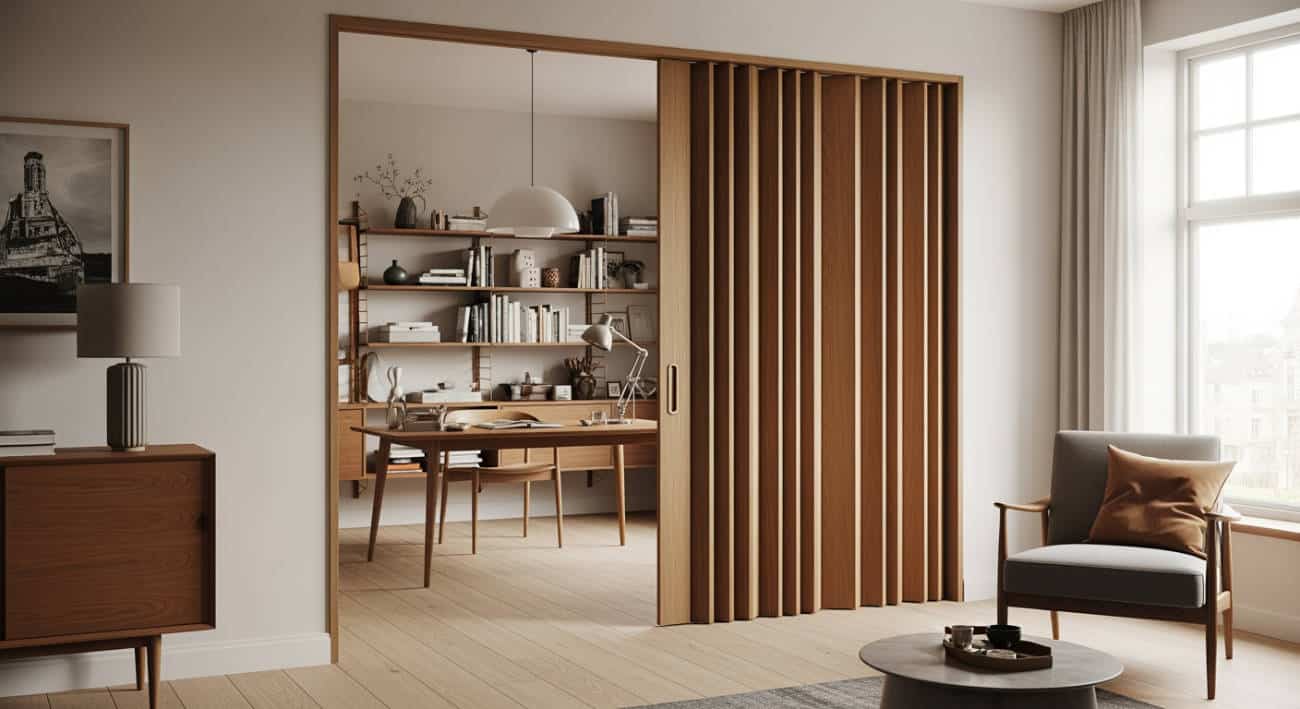
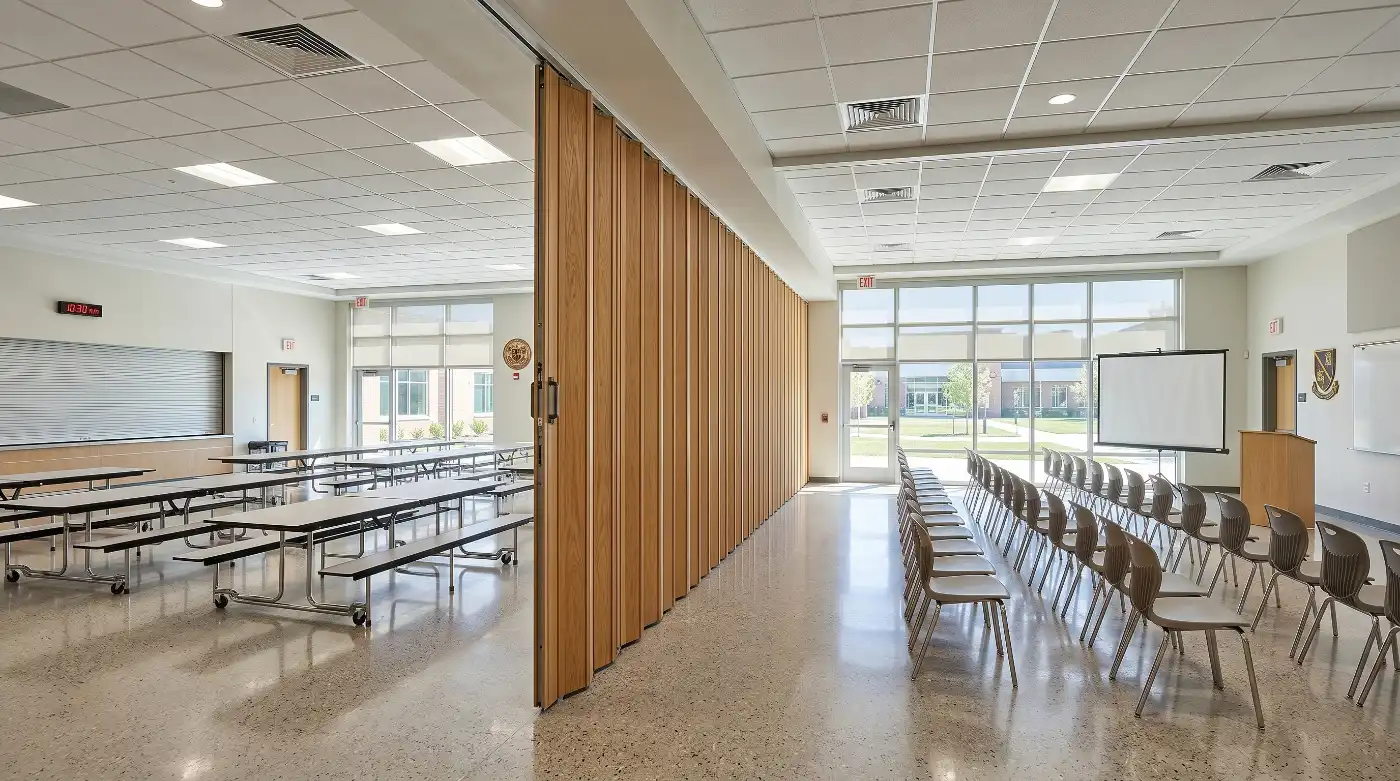
When it comes to stopping sound while maintaining total layout flexibility, very few products can compete with the industry-standard Woodfold 3300 Accordion Door. This is not the flimsy, rattling plastic folding door you remember from decades past. It is a precision-engineered acoustic barrier built specifically for commercial environments that demand quiet performance.
The secret to its success lies in its dual-wall construction. The door features two independent panels separated by an internal air space and lined with specialized acoustic materials. This design creates a physical buffer that absorbs sound waves instead of allowing them to pass through.
If you are looking for a reliable way to partition off an intake area or divide a multi-bed recovery space, installing the Woodfold 3300 Accordion Door provides a fast, permanent solution that operates smoothly for years. It delivers the sound dampening of a permanent wall with the convenience of a retractable divider.
Deconstructing Sound Transmission Class (STC)
To understand how acoustic barriers work, you need to understand Sound Transmission Class, or STC. This rating scale measures how effectively a building partition attenuates airborne sound. A higher STC rating means more sound is blocked.
A standard interior drywall partition with no insulation typically hits an STC rating of around 35. At this level, loud speech can be heard clearly through the wall, though individual words might be slightly muffled.
The Woodfold 3300 Accordion Door is engineered to hit an impressive STC rating of 33. When installed correctly with proper perimeter seals, it performs beautifully in medical environments. It effectively reduces normal conversational speech to an incoherent murmur, ensuring that what happens inside an examination room or billing office stays entirely confidential.
Strategic Layout Zones for Open-Plan Clinics
Managing sound in an open-plan healthcare space requires a clear zoning strategy. You cannot treat the entire floor as a single acoustic entity. Instead, break your clinic down into three distinct zones, each requiring its own unique architectural solution.
1. The Reception and Intake Zone
This is your primary acoustic battleground. Patients are checking in, sharing insurance cards, and discussing symptoms. Simultaneously, phones are ringing, and administrative staff are talking.
To prevent this sound from carrying into the main seating area, use strategic accordion doors to frame off the desk areas. This creates a psychological and physical boundary, ensuring that patients behind the divider can speak freely without rewriting the entire open feel of the entry lobby.
2. The Waiting and Lounging Zone
Waiting rooms are notorious for amplifying noise. Hard commercial flooring, large windows, and high ceilings turn the room into an echo chamber.
To fix this, combine soft interior finishes with flexible partitions. Utilizing large-scale room dividers allows you to break a massive waiting area into smaller, quieter sub-lounges. This simple change reduces the overall volume of the space and gives anxious patients a sense of personal territory and calm.
3. The Clinical and Examination Zone
This zone requires absolute privacy. If your clinic uses an open-concept treatment bay layout—common in physical therapy, dialysis, and chiropractic clinics—you must be able to isolate patients at a moment’s notice.
Integrating heavy-duty retractable systems gives practitioners the best of both worlds. You keep the collaborative, spacious environment for active therapy, but you can instantly slide a secure barrier into place when a patient needs a private assessment or a quiet moment to rest.
Beyond Accordion Doors: A Portfolio of Flexible Barriers
While acoustic folding panels are highly effective for day-to-day room separation, comprehensive clinical facilities often require a mix of different closure styles to handle security, visibility, and space management.
Industrial Strength and Sound Control
For massive clinical spaces, hospital loading zones, or specialized imaging rooms, traditional lightweight doors fail. This is where high-performance elephant doors come in. These oversized, heavy-duty structural closures are designed to handle extreme scale while providing substantial environmental and acoustic isolation.
Security Meets Airflow
Many institutional waiting rooms and hospital pharmacies need to lock up securely after hours without looking like a fortress. Incorporating premium roll-up doors allows you to close off service desks, pharmacies, or gift shops instantly. When open, they roll tightly into an overhead coil completely out of sight, preserving clean sightlines.
For areas that require security but still need continuous airflow and visual monitoring, the Mobilflex line offers an ideal solution. These folding grilles and closures secure open storefronts, clinic wings, or cafeteria counters cleanly, flexing out of the way during peak operational hours.
Designing the Rest of the Acoustic Ecosystem
No single door or divider can solve a sound problem entirely on its own. Sound behaves like water; it will find any gap, crack, or hard surface and exploit it. To maximize the performance of your flexible dividers, you must look at your space holistically.
According to research from the Acoustical Society of America, hard, non-porous surfaces reflect up to 95% of sound energy. If your clinic features polished concrete floors, drywall ceilings, and glass partitions, noise will bounce around indefinitely. Combine your retractable partitions with these complementary acoustic treatments:
-
Acoustic Ceiling Tiles: Replace standard drywall ceilings with high-performance mineral fiber tiles that boast a high Noise Reduction Coefficient (NRC).
-
Sound-Absorbing Wall Panels: Install fabric-wrapped foam panels along long, blank waiting room walls to catch stray sound waves before they echo.
-
Strategic Greenery: Large, leafy indoor plants don’t just improve air quality and mood; their varied surfaces break up sound waves and naturally diffuse background noise.
-
Sound Masking Systems: White noise or pink noise systems introduce a continuous, unobtrusive background hum that raises the ambient noise floor, making distant conversations naturally unintelligible.
Professional Installation and Perimeter Performance
An acoustic door is only as good as its installation. Because sound leaks through tiny air gaps, a poorly installed barrier will lose a significant amount of its rated STC performance.
When setting up a high-performance divider like the Woodfold 3300, installers must pay close attention to the perimeter. This means utilizing sweep seals along the bottom track, heavy-duty molding seals along the top track, and secure vertical jamb alignments.
Working with professional commercial door consultants ensures that your tracks are perfectly level, your structural headers can support the weight of the dual-wall panels, and your seals fit tightly against adjacent surfaces. Taking these steps prevents sound leaks and guarantees a smooth, effortless glide every single time the door is pulled shut.
Transforming the Patient Experience
Ultimately, managing sound is about improving the patient experience. A loud, echoey clinic feels chaotic, stressful, and unsafe. It puts patients on edge and forces staff members to strain their voices or speak in hushed, awkward whispers.
By taking control of your facility’s acoustics, you create a calm, professional sanctuary. Patients feel respected, secure, and relaxed, knowing their information is safe. Staff can focus better without the constant din of background noise, reducing administrative errors and fatigue. Investing in flexible, high-STC architectural barriers is a direct investment in your clinic’s operational excellence and long-term success.
The Short Version
-
Open-plan clinics offer fantastic aesthetics but struggle with sound control, risking patient privacy and regulatory compliance.
-
Retractable architectural barriers provide the acoustic separation of a permanent wall without sacrificing natural light or floor plan flexibility.
-
The Woodfold 3300 Accordion Door features a dual-wall design and an STC rating of 33, making it ideal for clinical speech privacy.
-
Effective sound management requires breaking a clinic down into distinct reception, waiting, and clinical zones with targeted barrier styles.
-
Maximizing acoustic performance requires combining retractable doors with professional perimeter installation, sound masking, and sound-absorbing finishes.
-
Specialty Doors offers a complete commercial ecosystem, including accordion panels, secure roll-up doors, and Mobilflex folding grilles.
Take Control of Your Space Today
Are you ready to fix the noise problems in your open-plan clinic or commercial facility? The expert team at Specialty Doors is here to help you select, design, and implement the perfect architectural solutions for your layout. Don’t let unwanted echoes compromise your patient privacy or employee focus. For tailored advice, structural requirements, or to explore our complete product line, please head over to our Specialty Doors Contact Page to connect with a design consultant today.