
Modern schools face an ongoing space crunch. Student enrollment climbs every year, but physical footprints and construction budgets rarely keep pace. School administrators must find ways to make every square foot of an existing building do double or triple duty.
The traditional school cafeteria sits empty for a large portion of the instructional day. It is a massive, high-ceilinged room that serves a single purpose for a few hours at lunchtime. This layout is an expensive waste of square footage.
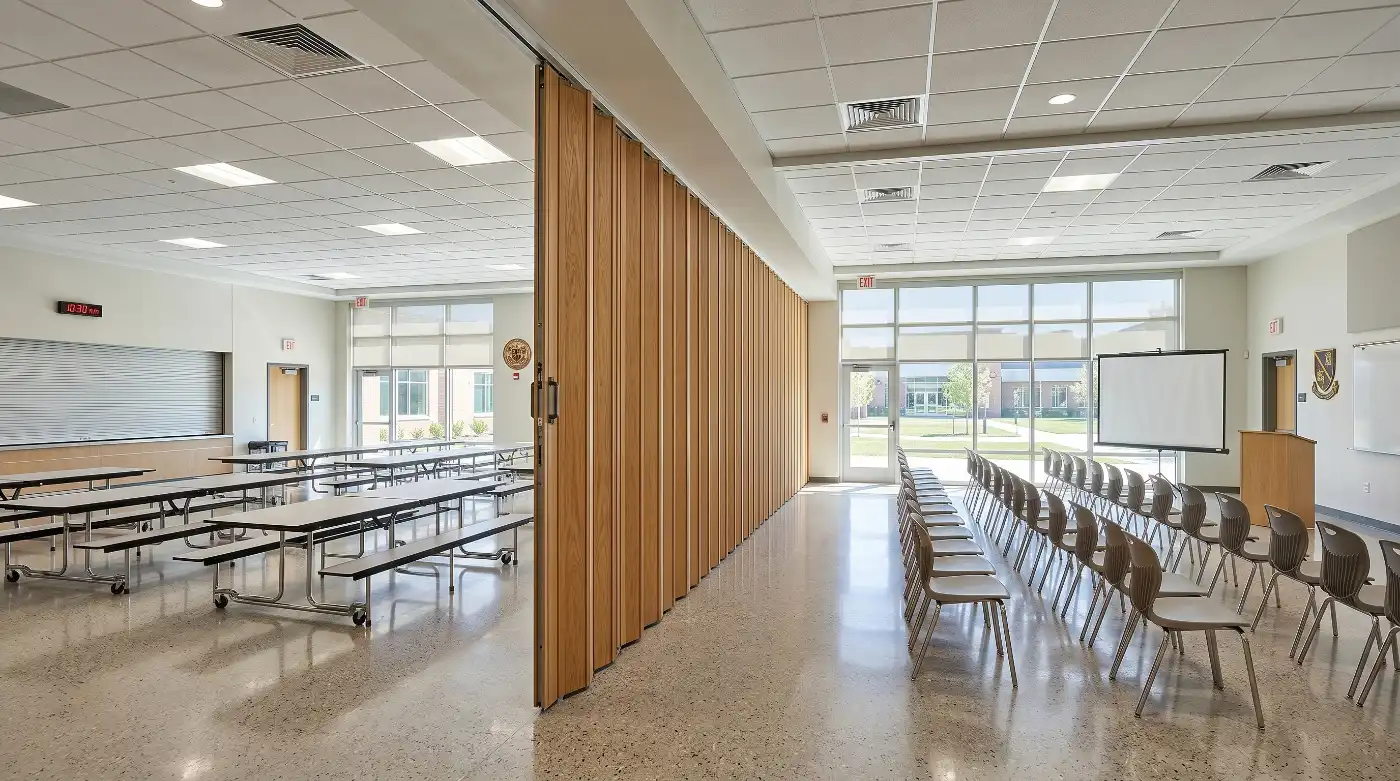
Transforming a standard lunchroom into a vibrant, multi-use assembly hall solves major logistical headaches. With the right structural upgrades, a chaotic dining hall easily converts into a quiet testing center, a lecture hall, a community meeting zone, or a theater rehearsal space.
The Logistics of School Space Optimization
Rethinking educational architecture requires shifting away from single-purpose rooms. Modern design trends focus heavily on adaptability. When a single space can morph to meet different needs throughout the day, the school operates much more efficiently.
Maximizing Square Footage on a Budget
Building new wings or standalone auditoriums costs millions of dollars. Navigating public school bonds, architectural approvals, and construction delays can take years. Most districts simply do not have that kind of time or capital.
Retrofitting an existing cafeteria costs a fraction of the price of new construction. By inserting smart, structural zoning tools, schools can create new functional rooms out of thin air. This approach stretches taxpayer dollars and keeps construction disruptions confined to summer breaks.
Balancing Open Layouts with Classroom Needs
An open cafeteria is great for moving hundreds of students through lunch lines quickly. However, that same wide-open layout makes the room useless for simultaneous activities. You cannot host a quiet faculty meeting on one side of the room while a music class practices on the other.
The goal is to preserve the open floor plan for large assemblies while gaining the ability to slice the room into smaller zones at a moment’s notice. Achieving this balance requires durable partitions that block both sightlines and sound waves.
The Acoustic Challenge in Large School Spaces
If you have ever stepped into a school cafeteria during lunch, you know the acoustic environment is brutal. Hard surfaces like terrazzo tile floors, concrete block walls, and plastic folding tables turn the room into a giant echo chamber.
The typical acoustic echo cycle begins when sound waves are generated by loud voices or clattering trays. These waves immediately bounce off hard tile floors and reflect off rigid concrete walls. This continuous reflection multiplies the sound energy, creating an incredibly high level of ambient noise that makes normal communication difficult.
Why Noise Control Matters for Student Performance
Excessive background noise and long reverberation times ruin focus. If a teacher tries to use a section of the cafeteria for an enrichment class, students will struggle to hear instruction over the hum of nearby hallways or kitchen cleanup.
According to acoustic design guidelines established by organizations like the Acoustic Society of America, high ambient noise directly impairs speech intelligibility and learning retention in developing minds. Proper sound isolation ensures that multiple groups can utilize the cafeteria simultaneously without distracting one another.
Solving Sound Bleed with STC Ratings
When selecting partitions to divide a large room, you have to look closely at the Sound Transmission Class (STC) rating. A standard visual screen might block a student’s view, but it will do absolutely nothing to stop sound.
High STC-rated barriers are packed with dense internal materials and sweep seals that physically trap sound waves. Investing in acoustic partitions ensures that a boisterous theater practice won’t bleed over into a quiet study hall happening twenty feet away.
Transforming Space with the Woodfold 3300 Accordion Door
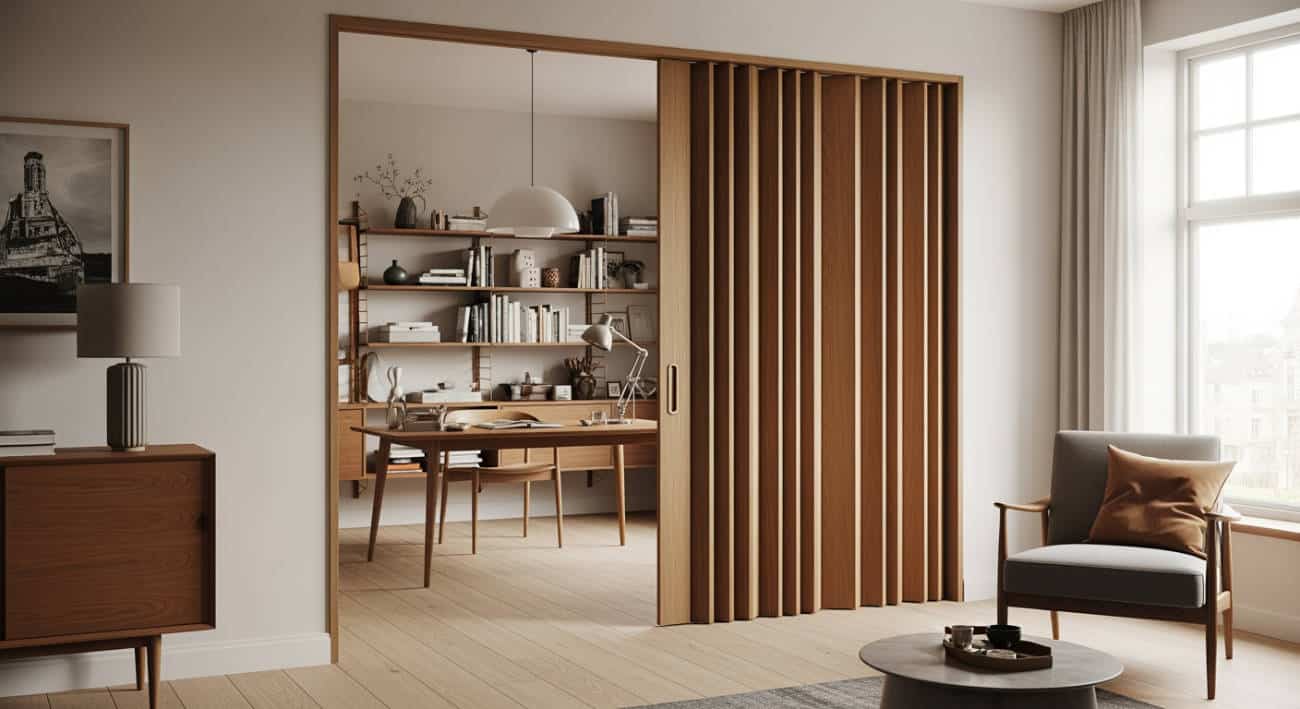
When it comes to partitioning heavy-use educational spaces, flimsy residential dividers will fail within a semester. Schools need industrial-grade infrastructure. The Woodfold 3300 Accordion Door is a top-tier choice for transforming large cafeterias into functional assembly halls.
Heavy-Duty Construction for High-Traffic Zones
The Woodfold 3300 is engineered specifically for commercial and institutional environments. It features a robust dual-wall panel configuration connected by durable, continuous vinyl hinges.
The internal framework relies on a steel hardware hinge system that ensures smooth, consistent operation over thousands of cycles. It does not drag, catch, or jump track, even when operated daily by school maintenance staff.
Acoustic Engineering Built for Multi-Tasking
The standout feature of this model is its sound-dampening capability. The door is built with sound-retardant liners and explicit perimeter seals that actively block sound transfer.
By pulling this accordion door across a designated zone, you instantly create a quiet, private room within the larger cafeteria footprint. It effectively tames the room’s echo chamber effect, making the divided spaces highly viable for lectures and presentations.
Aesthetic Customization to Match School Pride
A commercial door does not have to look like a sterile gray wall. This model offers a wide variety of finishes, including natural wood veneers, durable vinyl laminates, and custom paint finishes. Schools can pick a look that matches existing cabinetry or choose vibrant colors that complement school spirit branding.
Alternate Divider Systems for Specialized School Needs
While accordion doors are highly efficient, different cafeteria layouts might benefit from alternative architectural configurations. Evaluating all options ensures the school selects the perfect fit for its specific physical layout.
Flexible Room Dividers for On-the-Fly Adjustments
For spaces where a permanent overhead track installation isn’t possible, portable room dividers offer an excellent alternative. These mobile systems roll smoothly on casters and can be configured into various shapes to shield temporary classroom zones. They roll away into storage closets when the full cafeteria floor needs to be cleared. Learn more about these adaptable systems on the Specialty Doors Room Dividers Page.
Mobilflex Grilles for After-Hours Security
Sometimes the goal isn’t sound isolation, but security. When a school opens its cafeteria for evening community meetings, administrators often want to block access to the rest of the building. Folding security grilles provide a clear physical barrier that protects hallways and food service lines while keeping the main assembly hall open to the public. Explore these security configurations on the Specialty Doors Mobilflex Page.
Heavy-Duty Roll-Up and Elephant Doors
Large vocational schools or campuses with attached loading bays often need massive closures. Roll-up service doors and oversized specialty doors provide extreme structural protection and weather sealing for large access points. Discover these heavy-duty options on the Specialty Doors Roll-Up Doors Page and the Specialty Doors Elephant Doors Page.
Practical Implementation: Steps to a Successful Retrofit
Upgrading a cafeteria requires careful planning before ordering hardware. Following a clear roadmap keeps the project on track and ensures the final setup complies with all educational safety standards.
Step 1: Analyze Existing Floor Traffic
Before installing a partition, map out how students and staff move through the room. You must ensure that when the dividers are fully extended, they do not block main pathways to exit doors or trash disposal areas.
A successful retrofit planning workflow begins with mapping out student traffic throughout the day. Once the traffic is clear, planners must verify fire exit paths to remain compliant with safety regulations. Next, a structural engineer must inspect the overhead ceiling support to ensure it can hold the weight, which finally leads to the physical installation of the track system.
Step 2: Verify Fire Codes and Egress Pathways
School safety regulations are incredibly strict. Any partition you add must comply with regional fire codes regarding exit accessibility and material flammability. Work closely with an inspector to ensure that your new assembly hall layout provides adequate egress paths for emergencies. For comprehensive national building safety benchmarks, refer to the National Fire Protection Association codes.
Step 3: Assess Overhead Structural Support
A heavy-duty acoustic door like the Woodfold 3300 hangs from an upper track system. This design means the ceiling joists must be strong enough to support the dead weight of the panels. A structural engineer should inspect the plenum space above the drop ceiling to determine if extra steel support beams are required to carry the load safely.
Maximizing the Value of Your New Assembly Hall
Once the installation is complete, the school can begin scheduling the new space. Proper utilization turns the old cafeteria into the hardest-working room on campus.
Hosting Community and Faculty Events
With a quiet, professional assembly hall available, the school can host evening adult education classes, school board meetings, and neighborhood voting polls. The dividers allow these events to run smoothly without requiring the district to open, heat, or cool the entire school building.
Creating Flexible Testing Environments
Standardized testing periods throw school schedules into chaos because finding large, quiet rooms for hundreds of students is incredibly difficult. By closing the acoustic partitions, the cafeteria transforms into a quiet testing hall in minutes, keeping the school on schedule without disrupting other grade levels.
To see the exact specifications of the acoustic divider featured in this guide, check out the Woodfold 3300 Accordion Door Product Page. To explore the full catalog of architectural solutions, head over to the Specialty Doors Accordion Doors Page.
Quick Article Recap
-
Transforming a single-use cafeteria into a multi-use assembly hall saves schools millions of dollars compared to new building construction.
-
High ambient noise in school lunchrooms requires partitions with strong STC ratings to allow simultaneous activities without distraction.
-
The Woodfold 3300 Accordion Door offers heavy-duty steel hardware, acoustic liners, and customizable styles tailored for tough school environments.
-
Alternative systems like portable room dividers and Mobilflex grilles provide specialized flexibility and after-hours security.
-
Successful installations require careful planning around student traffic patterns, structural ceiling support, and local emergency fire codes.
Partner with Specialty Doors & Hardware
Ready to optimize your school’s footprint? The team at Specialty Doors & Hardware provides elite commercial partition systems tailored to your architectural layout. To learn more about our decades of industry experience, read our background on the Specialty Doors About Page. For custom pricing and project consultations, connect with our experts via the Specialty Doors Contact Page or visit our primary hub at the Specialty Doors Main Website.